Tuesday, November 30, 2010

Thanksgiving

The past 2 weeks have been a rollercoaster of activity. Let’s start at the beginning….

Last Monday at work, I was informed that I would be doing 8 hours of finance training on Wednesday and 8 hours of Marketing training on Thursday to local families/business groups. 36 hours is not enough time to create a training program and have it translated. Needless to say, we did the training and it went ok. The finance training was difficult, but the marketing went well and the group was very active in the discussion. I had each person complete a worksheet about their company and then create a basic marketing plan. It was well received and I have been asked to teach it again in the spring. The end of the week was busy with the launch of a new newspaper in Khentii. My NGO is assisting/underwriting a newspaper and I was asked to help in layout and to write a weekly article about business. The paper has been suspended due to financing issues at the moment, but a solution appears to be forthcoming.

Ashley continues to teach copious amounts of English to co-workers and co-workers children/relatives. She has been doing 3 hours a day pretty steadily. This week she is also doing fitness testing of local offices and planning a nutrition class. We may start teaching a cooking class, if there is enough interest in it. I teach usually 90 minutes of English each day, assuming the students show up.

Last week, we went to UB for a Peace Corps Thanksgiving celebration. The PC staff obtained turkeys and each volunteer brought a dish, so it was a giant potluck. The food was amazing and the company even better. In a surprise to many PCVs, I scored 2 touchdowns and had an interception during the PCV football game. We played ~8vs8 touch in a parking lot in front of the ambassador’s house. It was frigid, but fun. Prior to that, we spent the majority of our time shopping and meeting/eating/drinking with friends. I had pizza at least 3 times and a full English breakfast every morning. Also, the beer selection is much better in UB. There are 2 excellent Mongolian beers (Gem dark, and XarXorum) that are readily available there. The shopping was mostly done at Narantuul, which is a huge outdoor market. The only problem is that we were shopping for winter clothes (boots/coats) in sub-zero temps…not a good combination. My feet were numb from trying on boots in the freezing cold and Ashley was shivering trying on coats. One of the "fun" parts about Narantuul is the expectation to barter. Bartering is a long process that involves multiple competing sellers and may result in a few dollar reduction. Due to the cold and our need to hurry, we did not barter (the prices were good enough and we spoke Mongolian to sales people), but I anticipate bartering next time we go. We did get what we went for. However, I still want to get a camel hair sweater and Mongolian traditional boots. (I bought Russian wool-lined, black leather with buckles boots.) We stayed at UB Guesthouse, which was very nice, though we were in a dorm room with many others. Below is a picture of the traditional mongolian boots that I want to purchase (probably different colors though). I think they would be great for shoveling snow and walking to Starbucks for coffee on a snowy morning.

Unfortunately, each time we walked outside, we initially had to cough. The smog is very thick in UB, especially in the early morning during this time of year. There is a gray haze over the city and often the neighboring mountains can not be seen, which is unfortunate because they are snow-capped now. Actually, we have noticed a considerable amount of smog in our town after breakfast and after dinner, particularly if there is no wind that day. Coal is the primary fuel source for this part of Mongolia, so black/gray smoke is very common. If anyone has seen

This week I have been working with a coworker on translating a long, complex English business document into Mongolian. His English is fantastic and it is still a challenge, primarily due to the run-on sentences and use of business jargon. The lesson from this exercise is that if you are writing a business document that will be translated later; please keep the sentences (and grammar) simple.

Sunday, November 14, 2010

Dogs


Note: this post contains graphic content, may not be suitable for all animal lovers


They are an ever-present, though often neglected facet of life in Mongolia. Most hashaas (fenced yards) have at least 1 guard dog. The purpose of this dog is to bark at intruders and potentially scare away (or attack) unwanted guests. These dogs are often large and aggressive and rarely chained-up. One of the first things that we were taught in training is how to “deal” with these dogs. Almost every dog in the country knows “JOVE”, which when yelled at a dog, sends it away. We were also advised to carry a few small rocks when outside the city to use as projectiles if a dog gets too close. (Note: we were advised to throw the rocks near the dogs, not necessarily hit it.) In our city, there are large packs (~12) of roving dogs that are homeless. They remind me of a gang and they often tussle with other roaming packs. If a dog has a collar, it is supposed to signify that it is “owned”. Some of the pack dogs have collars, but most do not. The dogs patrol the trash bins/dumping sites and eat whatever scraps they can find. Due to the harsh winter climates, only the hardy stray dogs survive. Therefore, most of the dogs are large (50lbs+), very thick, short hair, and mutts. I read that initially Tibetan Mastiffs were used in the country, but that lineage as been diluted. Spaying and neutering are very rare in smaller towns. Therefore, every year, there are many packs of puppies found around town. Many of them don't make it through the winter. We were told by the vet that the most humane way to put a dog down here is with a bullet. There is 1 vet in our town and he does not spay/neuter. For population control, semi-annually, the police department conducts a dog round-up and execution. Any stray (or perceived stray) on a particular day is gathered and shot. Unfortunately, dogs with homes are inevitably caught-up in this practice (such happened to a previous PCV here). Vaccinations are also not common, but can be obtained in UB. House dogs are VERY rare in our town; though we do know of 2 Mongolian families that have them (1 in our building and 1 is a co-worker). Also, females dogs are less desirable because they can become pregnant and black dogs are the best (according to superstition).

Ashley and I have had 2 experiences with dogs, here are their stories:

Buddy: In front of the hospital was a sick dog that Ashley saw everyday at work. She occasionally fed it. Over time, it became sicker and unable to walk. We brought Buddy home to build up his strength and get him over his illness (he was an older dog). After researching his symptoms and one of our friends talked to the Vet, we were told that he had heavy metal poisoning (fatal). His cognitive abilities became increasingly impaired (unable to balance, etc). He lived with us for about 1 week before he left (walked back to the hospital). Ashley found him dead in his old spot.

Bear: Last Sunday, I was walking home from a friends’ house when I saw a very tiny dog in the street (not the main street, but a busy enough thoroughfare). I picked him up and moved him over to in front of a neighboring building. Many people were walking past him and there were no other dogs in the area. It was below freezing and he was shivering. When I put him down, he followed me all the way back to our apartment (2 buildings away). I had seen this dog the day before near the post-office. The amazing part is that he crawled up the 3 steps into our apartment building, given his tiny size. I showed Ashley and we decided to take him in for the night, feed/water him, get approval from our landlord, and talk about it the next day. We got landlord approval and decided to keep him. The convenient part is that one of our fellow PCVs’ host family will watch him (in their hashaa) when we go out of town. They have 2 young dogs and 1 old one (all excellent dogs, very nice to people). We named him Bear (he is all black except that his nose, tail, chest, and 4 paws are tipped in white). He weighed about 1.5 lbs when he came (less than 1 kilo of potatoes). Based upon his size and appetite, we estimated that he was 4 weeks when he arrived. He is still drinking milk, but starting to eat solid food. It has been very cold the past few nights (less than 0F) and he shivers when outside for more than a few minutes, so we doubt that he could have made it more than a few more days outside. He is very cuddly and affectionate. He is becoming paper-trained and we are working on chewing. Overall, he is a good puppy and is sleeping on my lap as I type this. We don’t have a plan for the long-term and frankly, he may not be with us that long, so we are enjoying each day as it comes.

Thursday, October 28, 2010

Binder + Dadal Business Trip

This week, I spent 4 days traveling north on a business trip, primarily focused on agriculture and bee-keeping.

Here is the summary:
We took a Toyota Landcruiser, with an elevated suspension and snorkel (air intake on the roof). I actually thought, "wow, this seems unnecessary...especially the snorkel". I was proven wrong.

The drive to Binder was on a dirt-trail, not a road. It was slow-going and bumpy, but the scenery was great. We passed many herds and gers set-up in the countryside. In Binder, we met with the local bee-farming group on multiple occasions. We also participated in the opening celebration for the local radio station (1st station in the area), and there I met the governor. Over the next few days, we went to the bee farms and observed the progress of winterization of the beehives. We stayed in a hostel-like building with 4 single beds, a small table, and a wooden stove. All of the buildings/houses have wooden stoves for heat and cooking. Interestingly, the "hotel" did not have indoor bathroom facilities (no central water system) and no outhouses, so I had to use the facilities at the neighboring school.

We drove up and back to Dadal on 1 day. The purpose of the trip was to meet with their bee-farming community, assess the winterization progress, and to check on the seabuckthorn shrubs. Seabuckthorn is a shrub that grows in this area. It produces small, orange berries which are incredibly healthy. According to Wikipedia, seabuckthorn has 15x as much Vitamin C as orange juice. Seabuckthorn is used in certain drinks/supplements, and is considered a cash-crop in this area.

The geography of northern Khentii (Binder/Dadal) is substantially different from the south/middle of the aimag. This area has many rivers and is forested, particularly the farther north you go. The forest and rivers provide better climate for certain animals, including wolves, fox, boar, bear, elk, etc. I did see 2 foxes when we were leaving Dadal. Anyways, this area reminds me of Colorado (but with smaller mountains). At one point, we were only 40 km from the Russian border (Siberia). The ethnic group of people in this area are called Buryiads, and they came from Siberia. I have mentioned them in previous posts. At one home, we had to take 3 shots of Buryiad vodka (made with fruit and 80 proof) with the grandfather. He has killed a huge boar and the head was hung on the wall.


This area is known for it's historical significance, primarily that of Chinggis Khan. (Referred to as Genghis Khan outside of Mongolia.) He was born outside of Dadal and lived there for many years before moving to other areas of Mongolia, and then conquering most of Asia/Middle East. I was able to visit some of the most important sites with the help of Baacancyrel, the driver. The picture beside is the monument marking the birthplace of Chinggis. It is on a large hill overlooking the Balj river valley.


This is the water-spring that supplied Chinggis and his family. It is located just outside of Dadal and has been supplying water for 800+ years. The blue scarves are used to mark a sacred location in Mongolia, or a spot of significance.


This is a set of stones that form a larger "monolith" in the countryside outside of Dadal. Supposedly, the stones mark the tomb/gravesite of Chinggis' sage/hero. This site is very remote and not well-known. Note that there is only 1 scarf. Also, this site was next to one of the bee-farmers' houses.


This is the convergence of the Onon and Tsenker rivers outside of Binder. This is one of the proposed burial sites of Chinggis Khan (under the rivers). The river already had ice on Oct. 25th. The Onon is known for its taimen (giant salmon) and this is a "popular" tourist spot in the summers. The river is only 3-6 feet deep, and we forded it close to this spot. There were no bridges in this area, so we crossed many streams, stream-beds, and 2 rivers.


This is the monument marking the spot where Chinggis formed the Mongolian country/government in the summer of 1206. It is located a few kilometers south of Binder, near the Onon river. This event is well-documented in most texts of Chinggis and Mongolia. It was the first unification of the warring tribes/clans and is called the khuriltai. Thousands of people attended this event and were hosted here for the entire summer. Tribes from across Mongolia, Siberia, and Northern China (Gobi) came to gathering and joined the Mongol nation.


This is an example of the type of house structure that some of the northern tribes used prior to the ger or wooden house. This particular monument marks the spot of the house of Chinggis' best friend (not sure of the name). It is also located outside of Dadal.


Trip Highlights:


Craziest foods consumed:
honeycomb (with honey still in it)
horse intestine (boiled, for breakfast)

Scariest Moment:
fording 2 large rivers, with water/ice washing up to the windows


Update for Ashley:
She finished and submitted a Millenium Challenge Grant application for non-communicable disease assessment in the aimag. She also bought new black leather high boots (with a small heel) because she "needed" them, according to her co-workers. However, they look nice and will help with her commute in the cold.


Saturday, October 16, 2010

Pictures from our new home/community

Thanks to a fellow PCV, I was able to get a faster internet connection at her work. Therefore, here all of the most recent pictures.

This is my best Mongolian picture so far....the original needs to be submitted to National Geographic because it exemplifies life so well here (and I am proud of it).


A few weeks ago, we took a hike (over flat ground) to a stone monument from the Turkic era (~700 AD). On the way, we came across a group of horses playing in a lagoon near the river.


Here is the stoneman that we found, also called a babbel (sp?). The blue scarves are good symbols in Mongolia, so they are draped around it. Also, people offered money and food, which are placed in front of it, or the money is tucked into the scarves.


These are the slippers (handmade from wool, camel hair, and leather) that Ashley and I wear around the house. Very warm and comfortable.


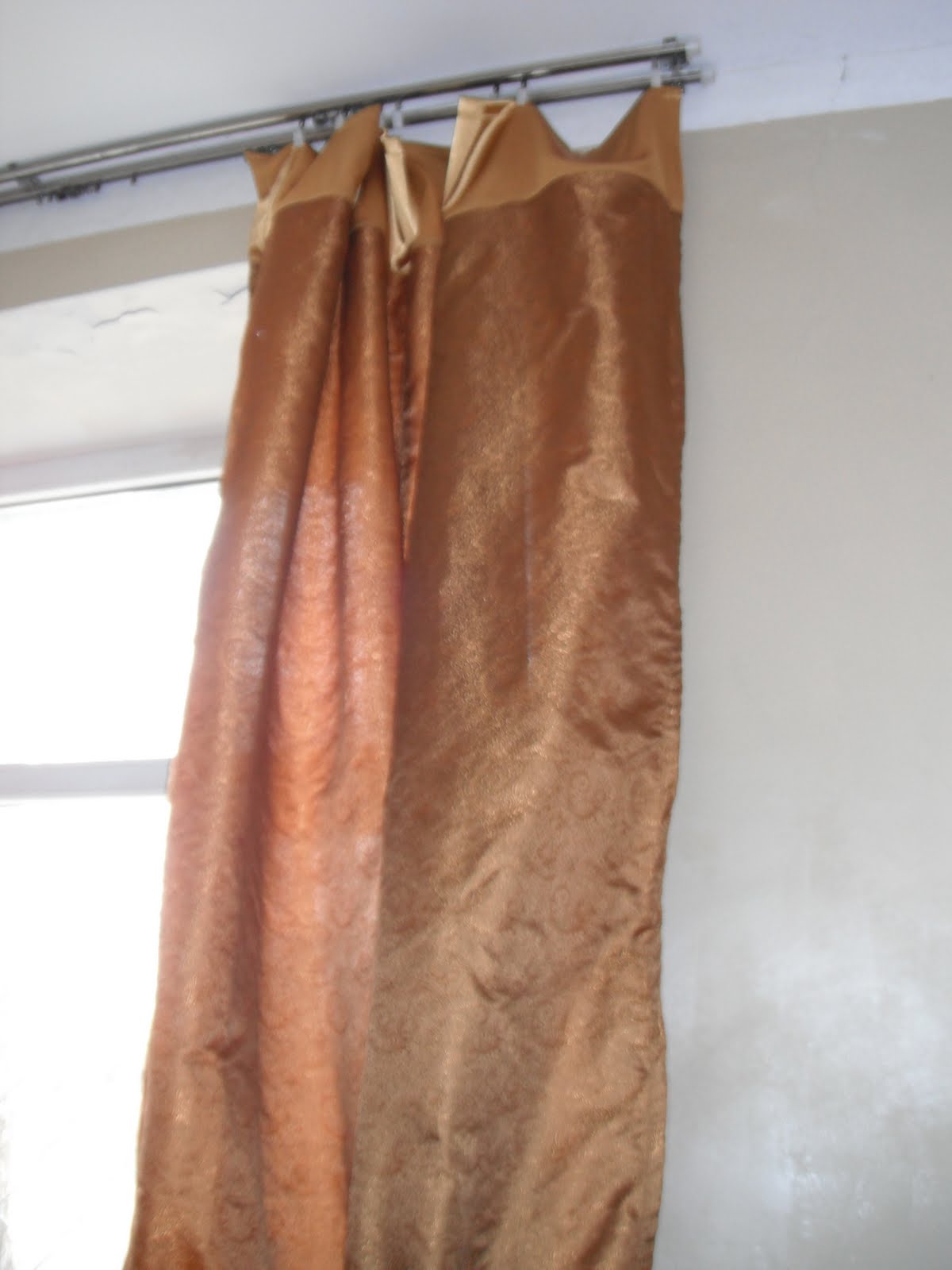
Here are the new curtains. There is actually a traditional pattern in the lower section, but it is very hard to see in this photo. The top is lined with gold fabric.


Here is the new kitchen prep table. Lacquered wood. The metal bowl is for the rice cooker and the pink bucket is for "bleaching" vegetables prior to cooking. The sunflower pattern is actually a plastic film that we found in a local store. The wood on the shelves absorbed water, so we put the film over top, to make it spill friendly and easy to wipe-up. We are VERY happy with it.


This is the new futon/couch. The fabric covers are new and though the seats are firm, it is very nice to have somewhere to sit.


Funny story for the week: we are approaching the end of fresh produce season and we wanted more tomatoes. Red tomatoes are expensive, so we went to a local store and asked for 1/2 kilo (1lb) of green tomatoes. She would only sell us this massive bag of green tomatoes, which is approximately 5 kilos (12 lbs). The entire bag cost 1,900 T, or ~$1.50. We put the tomatoes on the bottom of the kitchen prep table and about 1/2 have turned red. We have frozen a few pounds and have been trying new ways to eat them as they turn. I have been making omelettes with tomatoes almost every morning and Ashley has been putting them into whatever we have for dinner. I am quickly becoming tired of tomatoes, though I will miss them in the depths of winter.

Sunday, October 10, 2010

Winterization in Progress

First off, Ashley has been very busy at work this week, so once again, I am providing the blogpost (read into that statement as you will).

Weather/Clothes
The warm weather has left and we are into Autumn. Briefly, snow has fallen twice here. The daily highs are 40s, nightly lows are 20s (this does not take into account the wind). The central heat was turned on last week and our radiators started filling last night. 3 fins filled in about 12 hours...only 20 more fins to go! The water drips into the radiators from a main line and works its way through the system. Most of the other buildings were full on Thursday or Friday, so we must be at the end of the system. I have started wearing a wool hat (lack of hair). I found an awesome soviet style leather/wool hat with a bill and flip-down ear flaps in a local store. Unfortunately, I didn't have enough money to buy it when I was there (~$6), but I plan to go back this week. Ashley has ordered her winter boots (buryad boots). They are leather outers, fur-lined, and rubber bottoms. Supposedly, they are very warm. In a local 3ax (market), there is an old woman that makes them by hand. They cost ~$60 for the fur-lined ones and take about 2 weeks to make. Ashley has a much longer walk to work and her coworkers are worried about her in the cold, so we needed to order them ASAP. I still haven't made up my mind about winter boots, or which style to get. There are a few types (cowboy, basic, etc)....I just want to make sure that whatever I buy is made locally (not imported). We are going to buy winter jackets when we go to UB in November.

Language
I had my first private Mongolian language lesson this past Saturday. It was awesome. The teacher is a staff member at a local NGO who is fluent in English. It is helpful at this point to have someone who speaks English to explain the grammar structures. For 2 hours, we primarily worked on pronunciation. There are a few letter combinations that are very tricky and the emphasis is also on the first syllable, which is very different from English. I am planning for 2-3 hours per week of tutoring. PC provides some funds for tutoring, but I expect to personally foot some of the bill. We also spent time working on common phrases (What will we eat for dinner?, When will you come back to the office?, etc).

Apartment
The futon/couch has been successfully reupholstered. Actually, removeable covers were made for the cushions, which is even better. The seats were also fixed by covering the springs and adding more padding. Overall, very successful endeavor. The work was done by a local seamstress that works in my building. She spent about 2 days working on it and she went fabric shopping with us. The total bill was ~18,000 Tugrugs for material and ~25,000 Tugrugs for labor, which is about ~$35. That is substantially more economical than the $400+ for a brand new imported couch. Also, we had curtains made for the kitchen windows. When we moved in, the "curtains" were lace, which provided no benefit or privacy at night (we are on the ground floor). Once again, we picked out fabric and had a local seamstress put them together for us. They are gold/tan with a traditional Mongolian pattern and lined in gold, which matches the kitchen trim. It cost about $30 for everything, which once again, is much better than the $90 for new, imported curtains. I'll try to post pictures of the futon and curtains in a future post.
So, the apartment is pretty well complete. We reorganized and gave it a thorough cleaning. The natural light is great (southeast facing windows) and the potted plants are doing well, including the lettuce and basil. The geranium is going crazy and has almost outgrown its pot. We also got a small cactus from Ashley's work. I'm interested in trying to grow hops for next year....though more research is required.

Community Events
Last week, we were invited to the birthday dinner for a coworker. It was very relaxed, and she cooked up a great meal of potato huushur and cake. (Note: most huushur or buuz are made with meat, so non-meat is a special request.) Also, we had dinner with neighbors last week. They know Ashley from work and live in a close apartment. They speak no english, so it was an interesting conversation since we are slow and painful in Mongolian. They served traditional tsoivan, which was excellent. On Friday, World Vision gave 10 families new gers and I went to the ceremony, which was very nice. The families were homeless or had inadequate shelter. The gers were 5 wall (medium/large) and ornately painted. On Saturday, we had dinner with a Korean volunteer living here. Korea has a volunteer program similar to PC and there are ~80 people in Mongolia. The funny part is that he spoke very little English and we speak no Korean, so we spoke "Mong-lish" over dinner, which was entertaining. He is a very interesting guy and we plan to meet with him regularly. Hopefully, he can teach us how to cook good Korean food!


Note: If you plan on mailing us a letter/package and want to write the address on the label, please make sure to copy it exactly as we have it. Mongolian does not use the Latin alphabet, so some of the letters are very different (ex. л <> A or n [it is an L sound]). A few items sent had "English" versions of cyrillic, which required intervention by the post office. Let me know if you have any questions about this. And please, keep the mail flowing, we love it.


For next week, please post questions in the comments section and we will make sure to answer them.

жастин (Justin, or more closely Jaasteen)